The Basics of Pressure Regulators: What They Are and Why They Matter

April 29, 2025

The Basics of Pressure Regulators: What They Are and Why They Matter

Oil and gas production systems are characterized by unsteady dynamics due to multiphase, turbulent flows. Sudden gas pressure surges can rupture pipelines and equipment, potentially triggering catastrophic fires or explosions. That’s why precise and reliable pressure control is critically important for oil and gas production systems. 


Pressure regulators are self-contained, spring-loaded valves designed to control system pressure, either before or after the regulator. Their self-powered operation makes them an efficient and cost-effective solution for pressure management. Unlike control valves, regulators function without the need for external power sources like air pressure or electric actuators, simplifying installation and reducing operational costs.


For large Oil and operators, who process fluids from hundreds of wells, the cost of pressure control valves is an important consideration. Pressure regulators, due to their simple self-contained design, are a cheaper option to conventional actuated control valves. However, when pressure or flow ranges exceed a regulator’s capacity, control valves or pilot-operated pressure-reducing valves will become necessary.


At Beaumont Manufacturing and Distribution Company (BMD), we excel in industrial pressure regulator and control valve technologies, coupled with a profound understanding of the unique pressure control demands of the oil and gas sector. From our manufacturing facilities in Texas, we deliver a diverse range of pressure-reducing regulators, back pressure regulators, and specialty models. Designed with a focus on durability, safety, and efficiency, BMD pressure regulators are engineered to perform reliably in the most challenging production environments.


What Is a Pressure Regulator?

A pressure regulator is a self-contained pressure control device, designed to maintain the specified pressure level within a system. It can perform either a pressure reducing function or a backpressure control function.


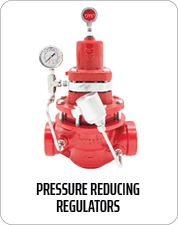
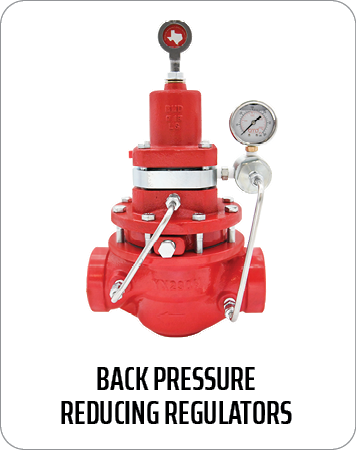
Pressure Reducing Regulators lower upstream pressure to a consistent downstream pressure, regardless of variations in upstream pressure. Conversely, Back Pressure Regulators ensure that upstream pressure remains steady, regardless of changes in downstream pressure. 


Regulators operate through three key mechanically interconnected elements. The first is a control element, consisting of a movable disc and a seat which adjusts process fluid flow by varying the flow area in the valve by moving the disc closer or further from the seat. The loading element, often a spring, sets the pressure. The sensing element, typically a diaphragm, balances force and adjusts the discs position from the seat, maintaining consistent system pressure despite condition changes.
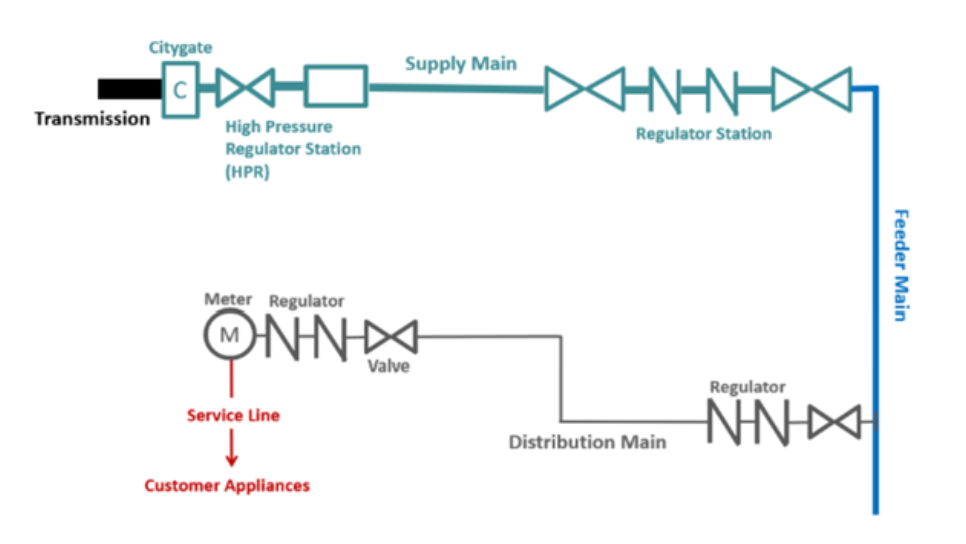


The diagram above illustrates the use of regulators in maintaining the necessary pressure levels within distribution systems. The selection of regulators over conventional control valves is primarily influenced by their lower cost. However, when flow rates or pressure ranges surpass the capabilities of pressure regulators, the use of control valves becomes essential for effective pressure control.

The applications of pressure regulators in the oil and gas industry can be divided into two primary categories:


Pressure Reducing Applications:  In these scenarios, downstream systems and devices require a consistent, lower pressure compared to the upstream pressure of the regulator. Examples include:


  •     Fuel gas supply to burners
  •     Purge gas supply to vent headers
  •     Tank blanketing systems for low-pressure tanks in hydrocarbon service
  •     Instrument air offtakes
  •     LPG and nitrogen cylinders


Back Pressure Control Applications:  Here, the requirement is to maintain a constant pressure in the piping or equipment upstream of the pressure regulator. Examples include:


  •     Test separators
  •     Surge drums
  •     Compressor suction drums
  •     Heater-treater vessels


Though pressure regulators serve to control pressure within safe limits, their functionality and design differentiate them from control valves or relief valves, as explained below:


Pressure Regulators versus Control Valves:  Control valves depend on external sensors, controllers, transducers, and actuators to operate. In contrast, pressure regulators are entirely self-contained, functioning independently by relying on the pressure of the process fluid.


Pressure Regulators versus Relief Valves:  Relief valves provide pressure relief in emergency situations when a system’s design pressure is exceeded. On the other hand, pressure regulators maintain a constant, pre-set pressure within the allowable operating range during regular operations.


Why Pressure Regulators Matter in Oil & Gas

Pressure regulators play a vital role in the oil and gas industry, ensuring smooth, efficient and reliable operations.


Optimal Equipment Performance:  Essential equipment, including compressors and separators, require precise pressure control for effective functioning. In remote and smaller applications lacking computerized control systems, pressure regulators ensure consistent pressure management regardless of upstream or downstream fluctuations.


Downtime and Efficiency:  Overpressure incidents can cause costly production deferment or system trips leading to production loss. Regulators stabilize pressure to minimize unnecessary shutdowns and system restarts, enhancing operational efficiency and reducing maintenance costs.


Compliance and Sustainability:  By maintaining proper pressure levels, pressure regulators prevent leaks and emissions, protecting the environment while ensuring adherence to regulations. Their reliability supports sustainable operations and shields companies from legal issues or fines.


Pressure Regulator Products Manufactured by BMD

BMD excels in the design and manufacture of pressure regulators, offering both direct-acting and pilot-operated regulators.

Direct-acting regulators use a simple design comprising a single loading spring, diaphragm, and disc-seat assembly. These components perform the functions of loading, sensing, and flow control. Due to their robust and simple construction, direct-acting regulators offer quick responsiveness and exceptional reliability. 


BMD’s product range includes the following direct-acting pressure reducing regulators:

RG10, RG20, and RG20H:  These pressure-reducing regulators are designed for heavy-duty oil and gas applications. 

The RG10 accommodates a maximum inlet pressure of 1500 psi and delivers an outlet pressure range of 27–500 psi. These models are available in body sizes of 1” and 2”. The materials of construction for RG10 include WCB Steel for the body, brass/stainless options for trim, Buna, Viton® and Nylon for the disk, Viton®/Neoprene for the diaphragm. The RG20 has a max inlet of 2000 psi with spring ranges from 5 to 500 psi. Material options for the RG 20 series include WCB Steel for the body, Aluminium /Stainless steel options for trim, Buna, Viton® and Nylon for the disk and Buna/ Viton® for the diaphragm.


RG30 and RG40:  These pressure-reducing regulators are suitable for instrument air and pneumatic systems. The RG30 is ideal for regulating flow in instrument air applications, such as controlling valves and positioners. Meanwhile, the RG40 is designed for chemical injection pumps, valve actuators, and controllers. Both models feature a 1/4” NPT connection compatible with tubing. While the RG30 employs a traditional single inlet and outlet configuration,the RG30 has 2 outlets. The RG40 is equipped with one inlet and three outlets, enabling it to manage multiple loads simultaneously. The RG30 supports a maximum inlet pressure of 250 psi, whereas the RG40 boasts an impressive rating of 5000 psi. The RG30 comes in die-cast Aluminium for the body and housing. The RG40 is available with Brass or 316SS options for the body and housing, Stainless steel/ 316SS for the trim, Nylon and PTFE for the disk and Stainless Steel or Monel 400 for the diaphragm.


Pilot-operated regulators are more complex than direct-acting regulators but offer higher capacity and precise control. These regulators utilize a smaller direct-acting pilot to sense process pressure and operate the main regulator. Unlike direct-acting designs, the diaphragm of the main regulator does not directly respond to process pressure. Instead, it moves based on the pressure signal from the pilot. This configuration is particularly advantageous for high-flow capacity and precision control applications in the oil and gas industry.


One example from our portfolio is the BMD RG50, a versatile and accurate pilot operated pressure-reducing regulator. It is used in a broad range of applications including natural gas distribution systems, boilers, furnaces, and more. The RG50 delivers exceptional accuracy, eliminates atmospheric bleed, and ensures a tight shutoff due to its heavy mainspring. Designed for high-capacity pressure control and superior low-pressure regulation, it combines efficiency with easy maintenance. Ideal for applications demanding both high flow and precision, the RG50 is a reliable solution for pressure reduction.


BMD offers three pilot options with varying spring ranges:  the RG50H supports a range of 10–65 psi, the RG50HP operates within 35–100 psi, and the RG50LD features multiple springs covering a range from 2 inches water column to 20 psi. For larger line sizes and flow rates BMD manufactures the following models for pressure-reducing and back-pressure control applications.


PR50:  The PR50 is a self-contained, non-venting, pilot-operated pressure-reducing regulator. It is designed for applications such as compressor suction pressure control and gas supply or distribution pressure control.


BP50:  The BP50 is a versatile, emission-free, pilot-operated back-pressure regulator. It is specifically designed for vent line applications and is commonly utilized in separators, heater treaters, compressors, and gathering systems.


Both PR50 and BP50 models are available in various body sizes, pressure ratings and end connections as follows:


  •     Threaded End Connection: This variant has a pressure rating of 300 psi and is offered in 2” and 3” valve body sizes.
  •     Flanged End Connection: This model comes with a pressure rating of 250 psi and is available in 2”, 3”, 4”, and 6” valve body sizes.


Both PR50 and BP50 models come with Body, Bonnet, and Hub made from ductile iron, and stainless steel internals.


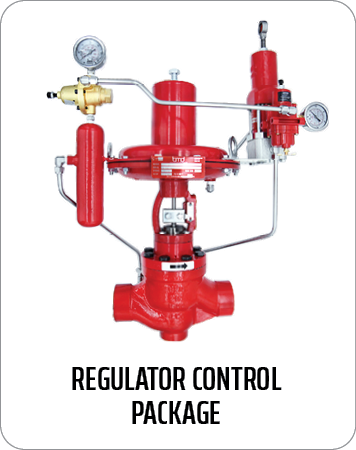
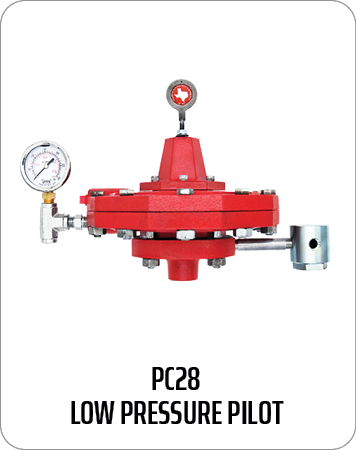
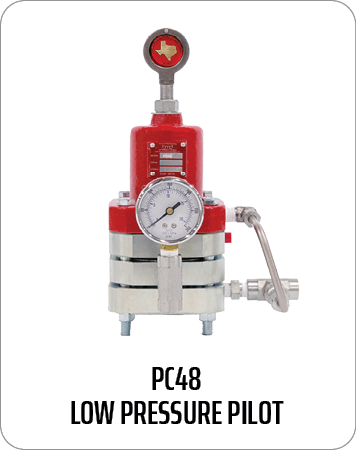
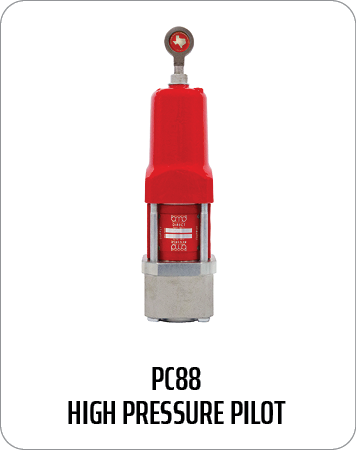
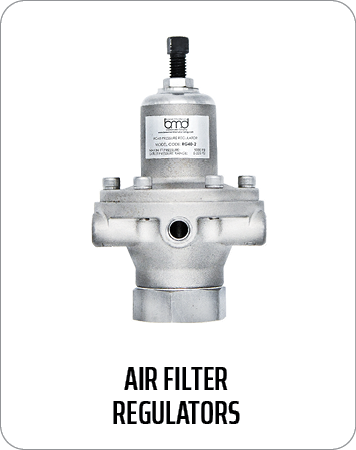
Regulator packages:  BMD offers fully assembled and factory-tested regulator packages for both pressure reduction and back-pressure control. These packages feature BMD’s PC88, PC48, or PC28 pilot for pressure sensing, two RG-type direct-acting instrument air filter regulators, a drip pot with drain, and interconnecting tubing. 


Pilots are available for low, medium and high-pressure settings ranging from 0.5 ounces to 1500 psi. Material options include Buna and Viton® for seals. When combined with a BMD control valve (ordered separately), the package is field-ready for complete pressure control applications.


BMD’s versatile and extensive range of pressure regulators is compatible with the diverse requirements of upstream, midstream, and downstream sectors. Engineered for durability, their robust construction withstands the rigorous demands of the upstream sector, while the wide selection of models provides precision, corrosion resistance, and emission-free performance essential for midstream and downstream hydrocarbon processes as well as chemical industries.


What Sets BMD Pressure Regulators Apart

BMD Pressure Regulators deliver unmatched performance and reliability. Proudly engineered and manufactured in Texas, they are built to endure the most extreme field conditions. With extensive customization options, they cater to specialized applications across industries. Backed by rigorous quality assurance and certifications, BMD regulators offer peace of mind in every operation. Count on our reliable delivery and expert technical support to ensure your systems run smoothly. When you choose a BMD product, you’re investing in unparalleled precision, enduring durability, and proven excellence.


Choosing the Right BMD Pressure Regulator for Your Application

Pressure regulators selection requires evaluating several factors as follows:


Pressure Range:  Identify both the operating and maximum allowable pressure for the system. A regulator should maintain pressure levels within this range, ensuring efficiency and safety.


Media Compatibility:  Choose materials compatible with the media (air, gas, chemicals) to prevent corrosion and contamination.

Flow Requirements: Ensure the regulator is sized to handle the required flow rate. High-flow systems need regulators with larger valve openings and precise control.


Installation Environment:  Consider factors like temperature, humidity, and exposure to chemicals. Use durable regulators for harsh or outdoor environments.


Common use cases for BMD pressure regulators include:

  • Oil gas production: Pressure control in separators, Surge drums, Compressor suction drums and Heater-treater vessels.
  • Natural Gas Distribution: Managing pressure in mainlines and fuel lines.
  • Reactors and Storage Tanks: For precise pressure control and blanketing service.
  • Instrument air and Pneumatic Systems: To regulate air or gas supply to control valve, positioners, chemical injection pumps.


Maintenance and Support for BMD Regulators

BMD’s pressure regulators offer durable construction, easy maintenance, and reliable performance. Replacement parts are always available, thanks to robust production capabilities. 

Supported by detailed documentation and exceptional customer service from skilled technicians, field representatives, and engineers, BMD delivers expertise nationwide.


Conclusion
Pressure regulators play a critical role in maintaining stable pressure control, across a wide range of industries. BMD’s pressure regulators ensure reliable pressure control in demanding industrial applications, safeguarding equipment and piping from overpressure risks. 

Designed for reliability and safety, our innovative, eco-friendly valve solutions deliver exceptional performance. With a diverse range of high-quality options, BMD empowers industries to tackle the toughest challenges with confidence and efficiency.

Looking for the perfect pressure control valve? Our team is here to assist you. Let BMD empower your operations with top-tier pressure regulators that set new benchmarks in safety and reliability. Don’t settle for less—reach out to BMD for a quote, spec sheet, or expert consultation now!

By Website Editor July 11, 2025
How to Maintain & Troubleshoot Relief Valves for Long-Term Performance Relief valves serve as essential safety equipment in oil and gas operations, regulating system pressures to safe levels while preventing destructive system failures. They operate as safety devices for pipelines, separators, and storage tanks throughout upstream and midstream oil and gas systems. BMD produces spring-loaded pressure relief valves that fulfill the highest requirements for durability, corrosion resistance, and reliability. However, even the most durable valves require scheduled maintenance and prompt troubleshooting to achieve optimal performance. Failing to maintain equipment properly leads to operational downtime, increased safety risks, and costly repair expenses. The following article provides instruction for relief valve maintenance and troubleshooting to ensure BMD valves operate safely and efficiently throughout their extended lifespan. Understanding BMD Relief Valves BMD relief valves are reliable and long-lasting. They can handle high-pressure systems, protecting against overpressure situations that could otherwise compromise the integrity of pipelines, storage tanks, and other critical equipment. BMD offers spring-loaded pressure relief valves that serve multiple applications across the oil and gas sector. The valves are in pipelines, separators, and storage tanks, where they protect equipment from overpressure. BMD valves surpass American design standards to deliver peak performance in demanding operational conditions. Common features include: Corrosion Resistance: BMD relief valves are designed to withstand corrosive environments commonly found in oil and gas operations, ensuring durability and a longer service life. Spring-Loaded Design: These valves provide reliable pressure relief by automatically opening when the system pressure exceeds the preset limit. American-Made Durability: Designed and manufactured in the U.S., BMD relief valves offer a high level of precision, performance, and safety. When properly installed and maintained, these valves can significantly improve the safety and efficiency of your oil and gas systems. Understanding their design and function is key to performing effective maintenance and troubleshooting. Why Relief Valve Maintenance is Critical Relief valves protect oil and gas operations by preventing overpressure, which can stop leaks, prevent equipment damage, and prevent catastrophic failures. The relief valves require regular maintenance to maintain their optimal operational state. Poorly maintained relief valves can cause various issues, such as: Worn seals or improper valve seating can result in leaks that compromise system pressure and cause safety hazards. If a valve opens too frequently or at the wrong pressure, it can cause unnecessary pressure drops that disrupt operations. Accumulation of debris or corrosion inside the valve can block the flow path, reducing the valve’s effectiveness. Regular inspection and maintenance can help detect and resolve these issues before they escalate. BMD recommends inspecting relief valves regularly based on operational conditions, including pressure cycles and environmental factors. Follow the manufacturer’s guidelines for maintenance intervals to ensure that valves perform reliably over time. Relief Valve Standards & Maintenance Recommendations BMD manufactures safety relief valves under Section XIII of the ASME code. To maintain compliance and performance, all relief valves need to be sent to a qualified VR shop for reset and recertification—this process cannot be performed by the end user. In addition, BMD strongly recommends that customers have a maintenance program in place that includes annual re-certification by a National Board certified shop holding a VR stamp to ensure safety, reliability, and regulatory compliance. Relief Valve Troubleshooting: Common Issues and Fixes Regular maintenance does not prevent relief valves from developing problems. The following section outlines typical problems together with specific troubleshooting procedures for BMD valves. The valve fails to open at its specified pressure setting. Possible Causes: Incorrect valve settings or blockage. Troubleshooting: The spring condition should be checked for wear while verifying that the valve operates at its designated pressure setting. The valve components need cleaning to remove any blockages that might exist. The valve operates at higher frequencies than expected or before reaching the set pressure. Possible Causes: Fluctuating process pressure, debris under the seat, or incorrect settings. Troubleshooting: The valve seat should be inspected for debris while verifying that the pressure settings match the specifications. The necessary adjustments or replacements should be made to the components. The valve develops leaks after its activation. Possible Causes: Seat wear, seal damage, or improper reassembly. Troubleshooting: The internal components need replacement or reseating according to the situation. All parts need correct alignment during reassembly to stop leaks from occurring. Audible chattering or vibrations. Possible Causes: Back pressure, poor mounting, or improper valve sizing. Troubleshooting: Check both the mounting and installation procedures and backpressure conditions. BMD provides installation guidelines which help users select appropriate valves and determine correct flow sizes. Long-Term Performance Tips for BMD Relief Valves The following best practices will help you achieve long-term performance: Create a maintenance schedule that considers operating conditions and manufacturer recommendations. Maintain detailed documentation of all maintenance work, inspection results, and replacement records. Technicians should receive BMD-specific maintenance training to perform proper care of the equipment. The use of OEM parts for all repair and rebuild operations will preserve both performance and reliability. Send the valve to BMD for factory service or certified testing when issues persist or when the valve exhibits significant signs of wear. Conclusion The oil and gas industry requires regular maintenance and accurate troubleshooting of relief valves to ensure safe and reliable operations. BMD relief valves are built to withstand demanding conditions, but their long-term performance depends on regular maintenance. The maintenance and troubleshooting guidelines in this guide will help you maintain relief valve reliability, which leads to better system safety and compliance, along with operational efficiency. For further assistance with OEM parts or technical support, contact BMD.
May 30, 2025
Introduction Control Valves play a crucial role in modern oil and gas operations, managing flow, maintaining pressure, and supporting overall process stability. In harsh upstream and midstream environments, the performance and reliability of these valves can significantly impact operational safety, efficiency, and profitability. At Beaumont Manufacturing and Distribution (BMD), we specialize in American-made control valves engineered for the extreme conditions found in oilfields and processing facilities. With decades of industry experience and a commitment to quality, our valves are trusted worldwide for their durability and field-tested performance. In this guide, we’ll explore the anatomy of a BMD control valve , breaking down the core components and highlighting what makes our products stand out in demanding applications. What Is a Control Valve? A control valve is a mechanical device that regulates the flow of fluid—such as oil, gas, steam, or water—by varying the size of the flow passage in response to signals from a control system. These valves allow for continuous modulation, unlike isolation valves, which are either fully open or fully closed. Why Control Valves Matter in Oil and Gas In the oil and gas sector, precision and reliability are everything. Control valves must: Maintain steady volume levels Regulate temperature via fluid control Ensure consistent flow rates Respond quickly to changes in process conditions Operate under high-pressure, high-temperature, and corrosive environments BMD’s valves are engineered specifically for these needs. Whether you’re operating in the Permian Basin or offshore platforms, our valves help you maintain safe, smooth, and optimized processes. Core Components of a BMD Control Valve A control valve is more than the sum of its parts—it’s a fully integrated system designed for optimal control and longevity. Here’s a closer look at each component in a BMD valve and the value it brings to the table. Valve Body The valve body is the primary pressure-retaining structure and the base of the control valve. It houses internal components and provides the flow path for the process fluid. BMD Valve Body Features: Materials: High-grade cast or forged carbon steel, stainless steel. Designs: Globe-style and angle-body configurations to suit different space and flow requirements. Compliance: All valve bodies Designed in accordance with ASME and other piping code standards. Actuator The actuator converts a control signal into mechanical motion, moving the valve plug, disc, or ball to modulate the flow. BMD Actuator Options: Pneumatic Actuators: Reliable even in remote locations with limited power sources. Actuators are available as either Reverse Acting (Fail-Closed) or Direct Acting (Fail-Open) to default to a safe position in power loss situations. Electric Actuator: An emissions-free device. Trim Assembly The trim refers to the internal elements directly responsible for flow control, including the plug, seat, and stem. These components determine the valve’s flow characteristic and shut off performance. BMD Trim Advantages: Material Selection: Hardened stainless steel, tungsten carbide, D2 tool steel and other specialty coatings to resist wear and galling. Flow Characteristics: Linear, equal percentage, or quick-open profiles. Noise and Cavitation Control: Anti-cavitation trim designs available for high ΔP (differential pressure) applications. We do not offer any anti-noise or anti-cav trim. Metal to metal seating: BMD offers metal to metal seating in our larger full port valves for extended life in erosive service. Unbalanced large valve trim: Our offering of unbalanced trim is great for sandy service so that sand doesn’t pack behind the valve plug like on a balanced valve. Our trim extends service life in abrasive media applications like sand-laden crude or produced water. Each trim set is precision-engineered and pressure-tested for tight shutoff and responsive modulation. Bonnet The bonnet serves as a pressure boundary and provides a guide for the stem while supporting the packing system. BMD Bonnet Design Features: Bolted or Pressure-Sealed not sure what ‘pressure sealed’ means. The design of the bonnet will vary by valve series but there are no options within a particular valve series.: Available depending on the pressure class and maintenance preference. Materials: Compatible with body materials to meet the same pressure, temperature and service as the body. BMD’s bonnet assemblies are designed with easy maintenance in mind, and can be removed to service the valve without taking the valve body out of line. Packing and Sealing System The packing system prevents leakage along the valve stem by creating a seal between internal and external environments. BMD Sealing Solutions: All BMD control valves come with BMD’s patent pending low-emissions packing system. Packing Materials: Engineering PTFE and rubber packing set. Environmental Compliance: Certified to ISO 15848 Live-Loaded Packing: No external packing adjustment is needed. Excellent performance in high cycle applications. Integrated Performance: Engineered as a Complete System At BMD, we don’t just build valves—we engineer systems. Each valve is a culmination of component synergy, where design tolerances and material compatibility are fine-tuned to deliver peak performance. Performance Testing Before a valve leaves our Beaumont facility, it undergoes a battery of performance tests, including: Hydrostatic Pressure Testing (per API 598) Leakage Testing (ANSI/FCI 70-2 Class IV–VI) Actuator Stroke and Response Verification This comprehensive quality control ensures that BMD control valves deliver predictable, reliable service in any condition, from high-pressure gas transmission to corrosive chemical injection. Common Applications of BMD Control Valves Our valves are field-proven in critical systems, including: Oil Production Units – separators, heater treaters, and flowlines Gas Processing – dehydration units, compressors, and scrubbers Midstream Pipelines – pressure regulation and pigging stations Water Injection and Disposal – high-pressure, high-volume service Each application demands specific capabilities—from pressure rating to media compatibility—which is why we offer a wide range of valve configurations and customizations. What Sets BMD Control Valves Apart? When choosing a control valve manufacturer, it’s not just about specs—it’s about partnership. Here’s why oil and gas operators trust BMD: Made in the U.S.A. - All our control valves are manufactured in the United States, with full traceability and quality assurance. This not only supports American jobs but ensures faster lead times and easier compliance with domestic sourcing requirements. Short Lead Times - Thanks to in-house manufacturing and a streamlined supply chain, BMD delivers where others delay. For mission-critical projects, our fast turnaround times reduce costly downtime. Unmatched Customer Support - We don’t just sell valves—we support systems. Our engineers work directly with your field teams to select, troubleshoot, and maintain your valve assets for long-term performance. Reduce Emissions with BMD’s Super Red packing - BMD’s patent pending Super Red packing system is standard in all BMD’s control valve lines. This proprietary material blend has been tested to ISO 15848 and will help ensure site OOOO compliance. Conclusion: Precision You Can Trust Understanding the components and functions of a control valve is essential for engineers and operators tasked with optimizing performance and reducing risk in oil and gas systems. With Beaumont Manufacturing and Distribution, you’re not just buying a valve—you’re investing in a product designed to perform where it matters most. Each BMD valve reflects our commitment to rugged design, material excellence, and technical support. Whether you’re retrofitting an existing system or building a new facility, we’re ready to help you select the ideal control solution. Need Expert Help? Let BMD support your operation with precision-engineered solutions and real-world experience. Contact our team today for expert technical guidance or to request a quote tailored to your application.
More Posts